dissenting dinergoths
March 19, 2026
Let me preface this post with the fact that some of my best friends have been or dinergoths; furthermore, when living in an area which has seen better times economically, it is almost impossible to not get to know this demographic. Oftentimes they are the only active people in a community.
In American Diner Gothic, Robert Mariani characterizes the dinergoth aesthetic as a universalizing weirdness brought on by the dissemination of traits previously concentrated within the internet into the real world; in material terms, provincial alternative aesthetics. This bleeding of internet-based aesthetics into the real world is indisputable. With the internet constantly at one’s fingertips and others increasingly atomized from one another, how could it not be? An idiom from a previous age is that we are the average of the five we are most often around; now many are no longer close to even five, with the internet acting as ersatz companionship. Radio waves are the great homogenizer as we rot in our homes with our thoughts interspersed between scrolling. There is abundance in this world, but it is not evenly distributed. For those without material resources, they only have the firehose of content.

Mariani errs in two parts. First, the characterization of dinergoths as a new, distinctively harmful tendency is incorrect. The internet-based aesthetics are new, but provincialism is a constant. That Mariani recognizes these tendencies as something new is a result of his upbringing as a coastal elite. Furthermore, the adoption of such aesthetics is neutral-to-positive; after all, even if not particularly pleasing to the eye, the act of adoption is an exercise of agency in itself. Second, his essay exists out of a psycho-sexual complex in which he fails to understand women as independent thinkers. This is an error of many men when discussing topics pertaining to women. Dinergoth-ism, as an aesthetic choice, is one such topic owing to the fact that men tend to not adopt aesthetics in this manner. If anything, this is a lack of agency on the behalf of men.
The tendency toward adopting alternative aesthetics is not new. A cultural phenomenon sweeps the coasts and filters slowly inland. There is rock in the eighties making its way from the streets of Chelsea into suburban Ohio, where previously buttoned-up kids listen to loud rock music and defy their parents. And before, as reform movements from the cities sweep to the hinterlands, convincing the young that they ought to care about “abolition” or “suffrage”. Culture requires a sufficient concentration of people to develop. Major cities provide this breeding ground such that the most virulent strains of culture emerge and take the rest of the nation. Mariani almost catches this when stating that “queerness-by-default is no longer for the grad student but for the townie gamer in the hentai hoodie”. In actuality, the queer grad student and townie gamer share the same cultural bug at different stages of its evolution. The internet only enables rapid intensification of this phenomenon such that they can exist at the same time; in previous eras the grad student would have moved on to post-punk glam Bowie aesthetics while the hinterlands still jam to Black Sabbath.
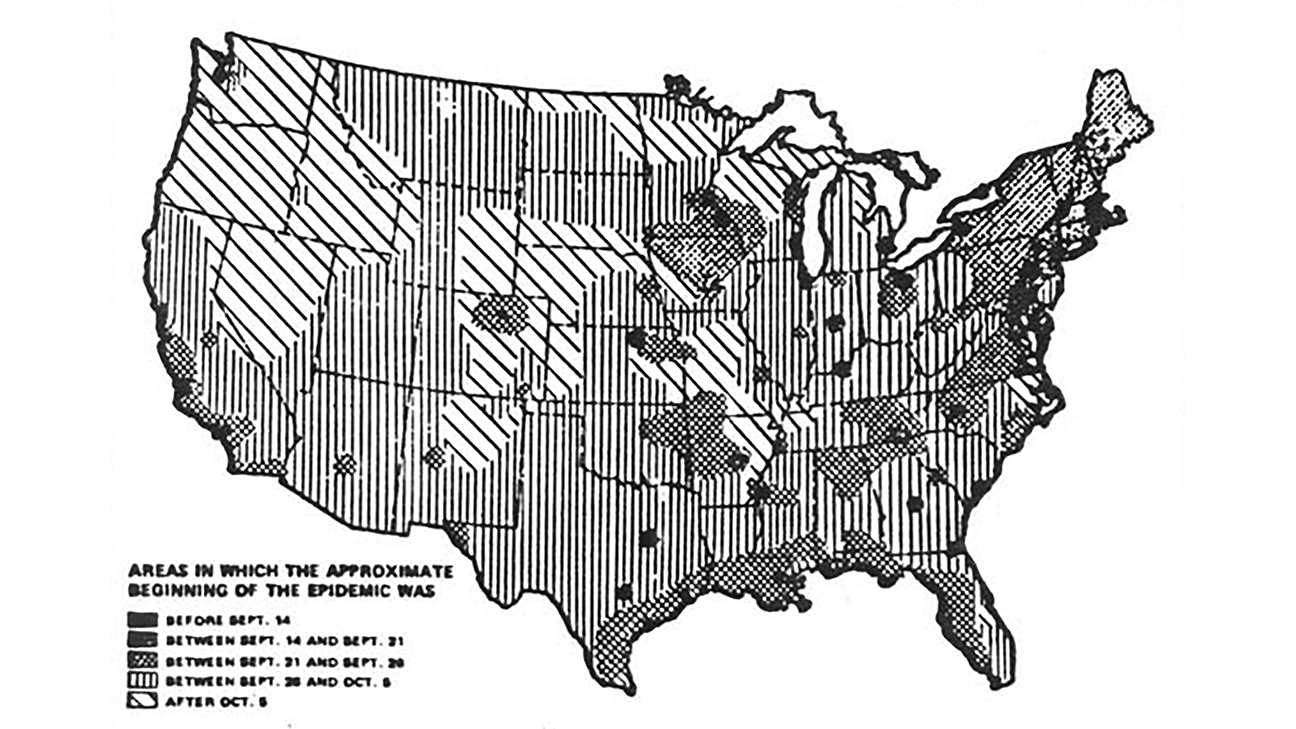
If one exists only within generative culture centers, the adoption of their culture outside of the center will seem alien to them. These cities (New York, Boston, Chicago, etc.) are characterized by abundance such that any aesthetic within it will be the highest form of itself: the best punk music, the most accurate cosplay, and so on. Of course those with the most resources will be able to create the most aesthetically pleasing version of a design. As culture filters outward to the rust belt, suburban sunbelt, and others less resourced, the emulation of such aesthetics will be hampered by material resources. If one is confined to endlessly-repetitive suburban Dallas, their constraint on emulation will be that which they can access by car. In the rust belt, often by poverty. It is not that those outside of the cultural centers are deficient in a trait, but rather in the abundance of the resourced urban core.
Furthermore, the adoption of such an aesthetic signals a capacity for agency. Despite Mariani’s implication that dinergoth-ism is becoming the default American mode, it is not so; the actual modal tendency is to do nothing but consume content, whether that be via short form media or TV. Shaping oneself in pursuit of an aesthetic requires a non-zero activation energy which signals that the actor is capable of doing more than the background population. Is mere aesthetic modulation the best way to exercise one’s agency? Perhaps not, but a positive signal nonetheless. Furthermore, in many of the volunteer-led spaces I was within, those with these aesthetics contributed to the care of these institutions at a far higher rate than the average person, evidencing this ability to act. Dinergoth-ism is not perfect for this – Mariani correctly identifies its capability to excuse self-defeating behavior behind the guise of mental health – but this is not unique to the provincial adoption of this culture, being endemic to even the Ivy Leagues. None of this is new; none of this is particularly alarming.
As well, Mariani’s essay is clearly driven by an urge to understand the motives of a woman who broke up with him as he wants to understand “this little world of hers”. By doing so, he takes a voyeuristic look at a culture that has, in his eyes, done wrong by him. The friction in his relationship was that of class status as he characterizes her downward mobility against his yuppie-dom. Even in his own words, he “loved her simplicity”, flattening her into an object to be dissected and consumed instead of truly understanding her. This is a classic failure mode of men, doubly so of those in abundance attempting to understand the lives of those born without.
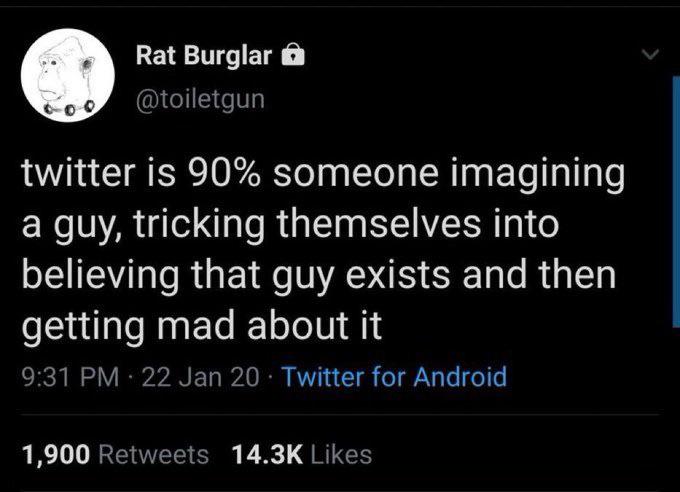
The denial of female interiority is not new and the full history thereof is outside the scope of this essay. Rather, as an over-generalization, men (in current western culture, the usual caveat of “not all men”, etc.) tend toward finding a logical rationalization of others’ behaviors; by doing so, flattening them with a lens which privileges their own thought process. In less words, intellectualization of emotional processes. This view converts the woman as a person into a woman as an object to be consumed. In his essay, he is primarily concerned with her actions and behaviors during their relationship (use of sex toys, dancing, watching anime) rather than how she felt toward said actions. When the breakup inevitably comes, he characterizes her reasoning as “incoherent”. It is just as likely that he never understood her emotions in the first place; the breakup was a result of his general lack of understanding. And thus, the rest of his writing comes from his attempt to justify why she was the way she is. While dinergoths are real, his characterization of them is skewed by the tendency to overgeneralize a personal phenomenon. Ironically, this too has become much easier with ready access to the internet.
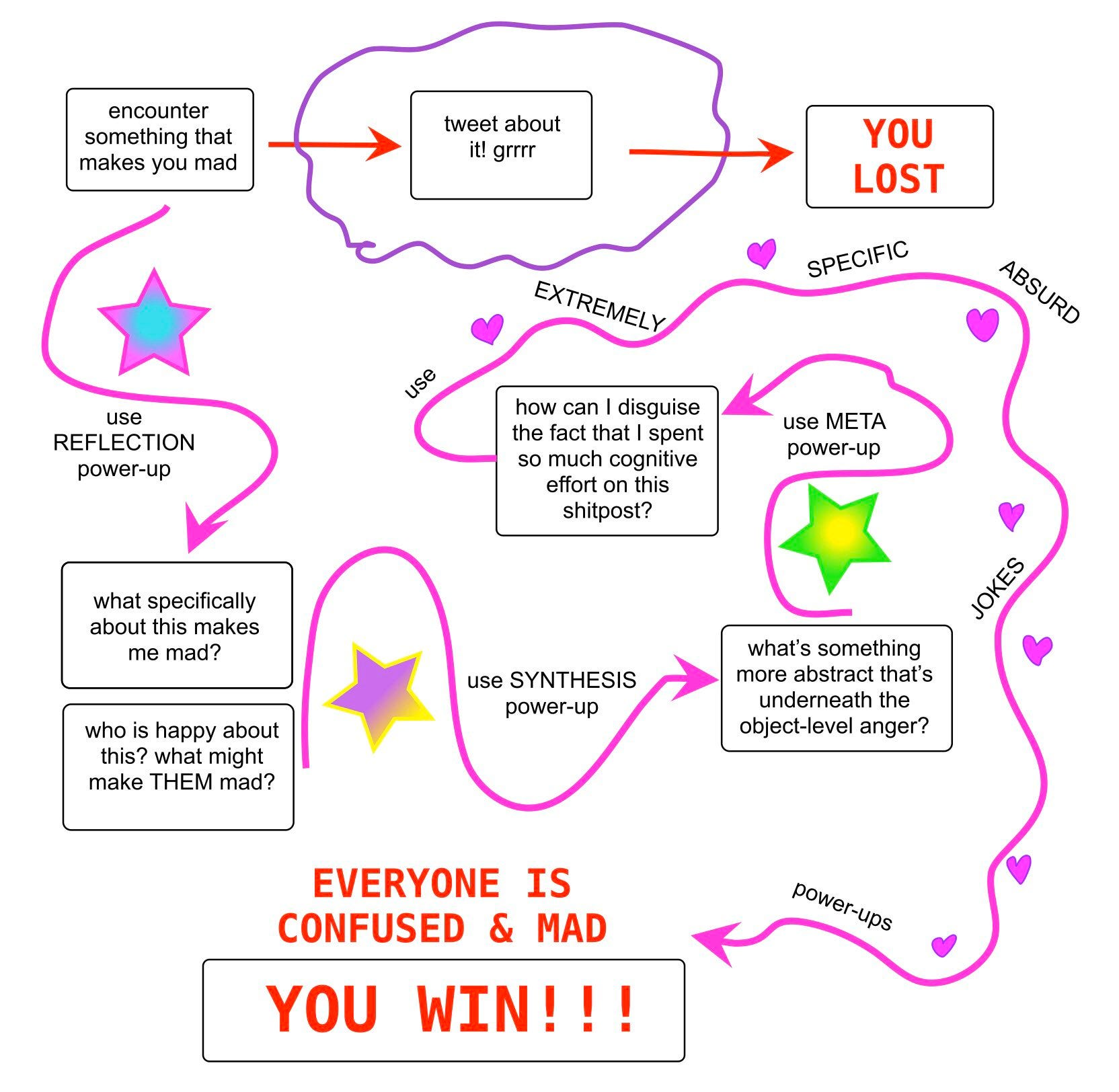
Personally, I do not actually like dinergoth aesthetics; oftentimes, they’re just not pleasing to the eye, which is enough for me. Furthermore, I am against the cultural homogenization brought on by the internet in general. Let one-thousand cultures bloom. But this is a larger contention against mass media’s effect on the individual. Oftentimes, one should ask whether they are mad at an instance of a phenomenon or whether there is a larger issue causing that which they are upset about.